
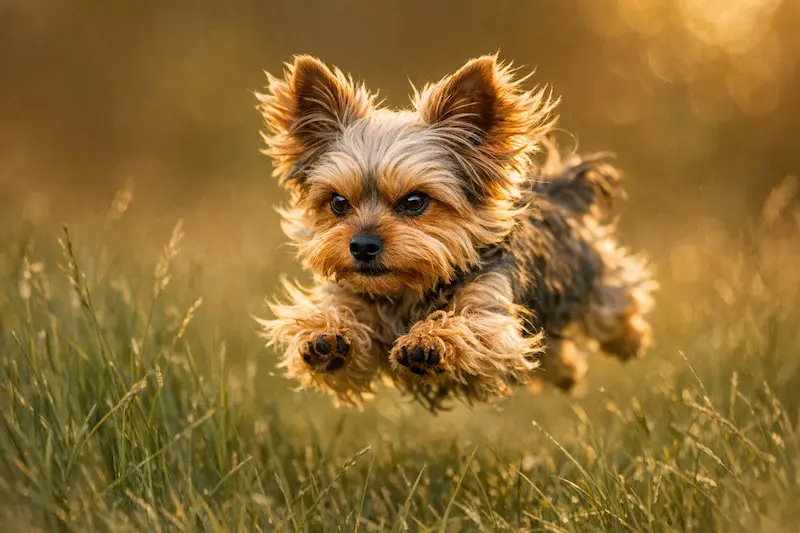
The True History of Yorkshire Terriers as Hunters
The Yorkshire Terrier's hunting heritage is not just folklore - it's documented history that shaped every aspect of this breed.
Origins in 1800s Industrial England
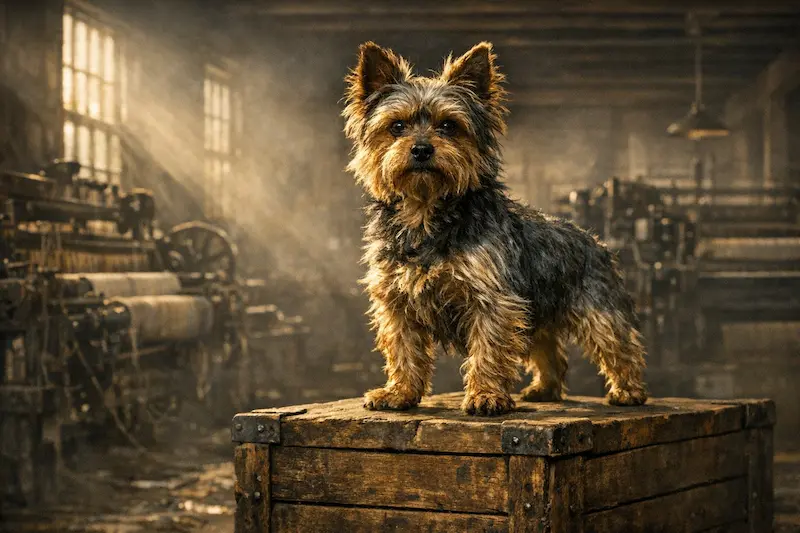
Yorkshire Terrier Creation Timeline
What Yorkies Were Bred to Hunt
Yorkshire Terriers had one primary job: eliminate rats in industrial settings.
Textile Mill Ratting
- • Mills stored wool/cotton (attracted rats)
- • Rats damaged expensive materials
- • Spread disease among workers
- • Small dogs could navigate mill machinery
- • Yorkies caught dozens of rats per day
Coal Mine Ratting
- • Rats infested mine tunnels and equipment
- • Ate miners' lunch provisions
- • Small size fit in tight mining passages
- • Fearless in dark, confined spaces
- • Protected stored coal from contamination
Why Yorkies Made Perfect Ratting Dogs
The Yorkshire Terrier was purpose-built for this job through selective breeding:
- Small size (6-9 lbs): Could pursue rats into narrow spaces, under machinery, into walls
- Fearless temperament: Would engage rats despite risk of injury
- Quick reflexes: Fast enough to catch agile, fast-moving rats
- Strong bite for size: Powerful jaw could deliver killing bite instantly
- Terrier tenacity: Wouldn't give up until rat was dead
- Alert nature: Noticed rat presence immediately through sight, sound, smell
- Silky coat: Less likely to carry dirt/debris from hunting work into living areas
Rat-Catching Competitions
Yorkshire Terriers' hunting prowess was so renowned that rat-catching became a sport:
Victorian Era Rat-Baiting Events
Pubs and taverns held timed competitions where terriers (including early Yorkies) were placed in pits with rats. Spectators bet on how quickly dogs could kill all rats.
Famous record: A small terrier named "Billy" killed 100 rats in 5 minutes 30 seconds in 1825. While not a Yorkshire Terrier (breed didn't exist yet), Billy's bloodline contributed to Yorkie development.
Note: These events are now illegal and considered animal cruelty. They're mentioned only for historical context of the breed's hunting capabilities.
Genetic Hunting Traits in Modern Yorkies
Despite 150+ years as companion dogs, Yorkshire Terriers retain ALL their hunting genetics:
1. Prey Drive (Chase Instinct)
What it is: Hardwired desire to chase and catch small, fast-moving animals.
How you see it today:
- Obsessive focus when squirrel appears in yard
- Chases birds with single-minded determination
- Lunges at cats, rabbits, or other small pets
- Chases rolling balls, leaves blowing in wind, moving shadows
- Goes from calm to "hunting mode" instantly
- May tremble with excitement when prey spotted
⚠️ Safety Warning:
Never allow Yorkies off-leash in unfenced areas. Prey drive overrides all training. A Yorkie chasing a squirrel will run into traffic, get lost, or encounter dangerous wildlife. This instinct is stronger than their desire to obey you.
2. Ratting Instinct
What it is: Specific genetic programming to hunt and kill rodents.
How you see it today:
- Intense, laser-focused attention on any rodent (mice, rats, hamsters)
- Different from general prey drive - this is specialized hunting
- Will dig, scratch, and work tirelessly to reach a rodent
- Cannot be trusted around pet rodents (hamsters, guinea pigs, gerbils)
- May catch and kill mice in home - this is natural behavior
- Shows no fear of rodents despite rats being large for Yorkie size
Important reality: A Yorkshire Terrier will kill a pet hamster if given opportunity. This isn't aggression - it's instinct. Keep pet rodents completely separate.
3. Shaking/Killing Behavior

What it is: Head-shaking motion to break prey's neck/spine for quick kill.
How you see it today:
- Grabs toy and violently shakes head side-to-side
- Particularly intense with squeaky toys (simulate prey sounds)
- May "kill" toy then carry it around proudly
- Does this with socks, shoes, small items
- Completely normal - let them do it
This is healthy behavior! Shaking toys is appropriate outlet for killing instinct. Provide durable toys specifically for this purpose.
4. Terrier Fearlessness
What it is: Genetic confidence and lack of size awareness.
How you see it today:
- Challenges dogs 10x their size without hesitation
- Barks at large dogs aggressively
- No sense they're only 4-7 pounds
- Will chase off larger animals from "their" territory
- Not intimidated by loud noises, new situations
- Confident, almost cocky attitude
Protect Them From Themselves
This fearlessness saved their lives when fighting rats, but endangers them today. Yorkies need protection from:
- • Larger dogs that could harm them
- • Wildlife (coyotes, hawks, owls)
- • Traffic (they'll chase prey into streets)
- • Heights (no fear of falling)
5. Alert/Watchdog Barking
What it is: Genetic programming to alert humans to prey/intruders.
How you see it today:
- Barks at any movement outside windows
- Alert barking at doorbell, knocks, passing people
- Cannot resist announcing squirrels, birds, cats
- Territorial barking when strangers approach property
- High-pitched, persistent bark
Working Yorkies in mills/mines needed to alert humans to rat locations. Modern Yorkies still "report" anything unusual.
6. Digging & Burrowing
What it is: Instinct to dig into rat burrows and nest areas.
How you see it today:
- Digs in backyard (trying to reach burrowing animals)
- Burrows into blankets, pillows, bedding
- Scratches at carpet, furniture
- Creates "nests" by arranging blankets
- Loves sleeping under covers
This is why Yorkies love burrowing under blankets - they're recreating the feeling of pursuing prey into tunnels.
Do Modern Yorkies Still Hunt?
Yes, absolutely. While they're primarily companions today, Yorkies retain full hunting capability:
What Modern Yorkies Will Hunt Given Opportunity
✓ Successfully Hunt & Kill:
- • Mice (primary target)
- • Rats (if not too large)
- • Moles and voles
- • Small snakes
- • Insects (moths, beetles)
- • Baby rabbits (if caught)
⚠️ Will Chase But Usually Can't Catch:
- • Squirrels (too fast, climb trees)
- • Birds (fly away)
- • Cats (usually faster, may fight back)
- • Adult rabbits (too fast)
- • Chipmunks (escape into burrows)
Real-World Hunting Stories
Urban Mouse Control
Many Yorkie owners report their dogs catching mice in homes/apartments. The dog will hear mouse in wall, scratch at baseboard, catch mouse when it emerges, and kill it with characteristic head shake. Some Yorkies become known as excellent "mousers" in their households.
Rural Vermin Control
Yorkies living in rural areas often patrol property for rodents. They'll actively hunt moles, voles, and field mice. Many barn cat owners add a Yorkie to their pest control team - the dog handles ground rodents while cats handle higher areas.
The Squirrel Obsession
While Yorkies rarely catch squirrels, they never stop trying. Many Yorkies spend hours daily watching windows for squirrels, bark frantically at sight of one, and pull desperately on leash to chase. This obsession is so strong that some owners describe their Yorkie as "squirrel-obsessed."
Comparing Yorkies to Other Hunting Breeds
How do Yorkshire Terriers stack up against other dogs bred for hunting?
| Breed | Prey | Modern Hunting | Instinct Retained |
|---|---|---|---|
| Yorkshire Terrier | Rats, mice | Rarely hunts | Very High |
| Jack Russell Terrier | Fox, badger | Still used for hunting | Extreme |
| Dachshund | Badger, rabbit | Occasionally hunts | High |
| Labrador Retriever | Waterfowl | Actively used for hunting | High (retrieving only) |
| Pug | None (companion only) | Never hunts | None |
Key insight: Yorkies retain hunting instinct as strongly as working terrier breeds despite 100+ years as companions. Their prey drive is comparable to Jack Russells - they're just less likely to get opportunities to use it.
Managing Hunting Instincts in Pet Yorkies
You cannot train out genetic hunting behaviors, but you can manage them safely:
Providing Appropriate Outlets
✓ Healthy Hunting Outlets:
- • Flirt poles: Toy on rope/pole dog can chase - perfect prey drive outlet
- • Squeaky toys: Mimic prey sounds, satisfy hunting instinct
- • Hide and seek: Hide treats/toys, dog "hunts" them indoors
- • Puzzle feeders: Engage problem-solving hunting brain
- • Fetch games: Controlled chasing in safe environment
- • Snuffle mats: Mimic foraging/hunting for food
✗ Don't Do These Things:
- • Punish hunting behavior: Causes confusion - it's genetic, not misbehavior
- • Allow off-leash time in unsafe areas: Prey drive overrides recall
- • Let them "practice" chasing cats/wildlife: Reinforces dangerous behavior
- • Expect they'll outgrow it: These instincts last entire lifetime
- • Trust them with pet rodents: Recipe for tragedy
Training That Helps (But Won't Eliminate Instinct)
- "Look at me" / "Watch" command: Redirect attention from prey to you
- Strong recall: May work before dog enters full prey drive mode
- "Leave it" command: Helps resist investigating small animals
- Impulse control: Practice waiting before chasing thrown toys
- Desensitization: Reward calm behavior when squirrels/birds present
Reality check: Even perfectly trained Yorkies will chase prey given opportunity. Training reduces frequency/intensity but never eliminates instinct.
Common Questions
Are Yorkshire Terriers more aggressive because they're hunters?
No. Hunting instinct is not aggression. Yorkies are friendly, affectionate companions with people. Their prey drive is directed at small animals (natural prey), not humans. A Yorkie that chases squirrels obsessively can be perfectly gentle and loving with family. True aggression (toward people/dogs) is separate from hunting behavior.
Can Yorkies live with cats safely?
Yes, but requires careful introduction. Yorkies raised with cats from puppyhood usually do fine - they learn the cat is family, not prey. Adult Yorkies meeting cats for first time may chase them. Key factors: supervise initially, give cat escape routes, teach Yorkie "leave it" command. Many Yorkie-cat households work well, but never guaranteed due to prey drive.
Do hunting instincts make Yorkies harder to train?
Yes and no. Yorkies are intelligent and CAN learn commands well. However, when prey drive activates, it overrides training. A Yorkie with perfect recall will ignore you completely when chasing a squirrel. This doesn't mean they're untrainable - it means you must manage environment and never rely on training to override instinct in high-prey situations.
Will my Yorkie kill my pet hamster/guinea pig?
Yes, almost certainly if given access. This isn't meanness - it's genetic programming. Yorkies were bred specifically to kill rodents. They cannot distinguish between "pet rodent" and "pest rodent." Keep pet rodents in separate rooms with closed doors. Never allow Yorkie near caged rodents unsupervised - they may work at cage until they get in. This is non-negotiable for rodent safety.
More Free Yorkie Health Tools
Interactive calculators and symptom checkers built specifically for Yorkie owners.
- • Due date and gestation calculators
- • Symptom checkers for common Yorkie concerns
- • Weight, nutrition, and health planning tools
- • Clear, beginner-friendly next-step guidance