
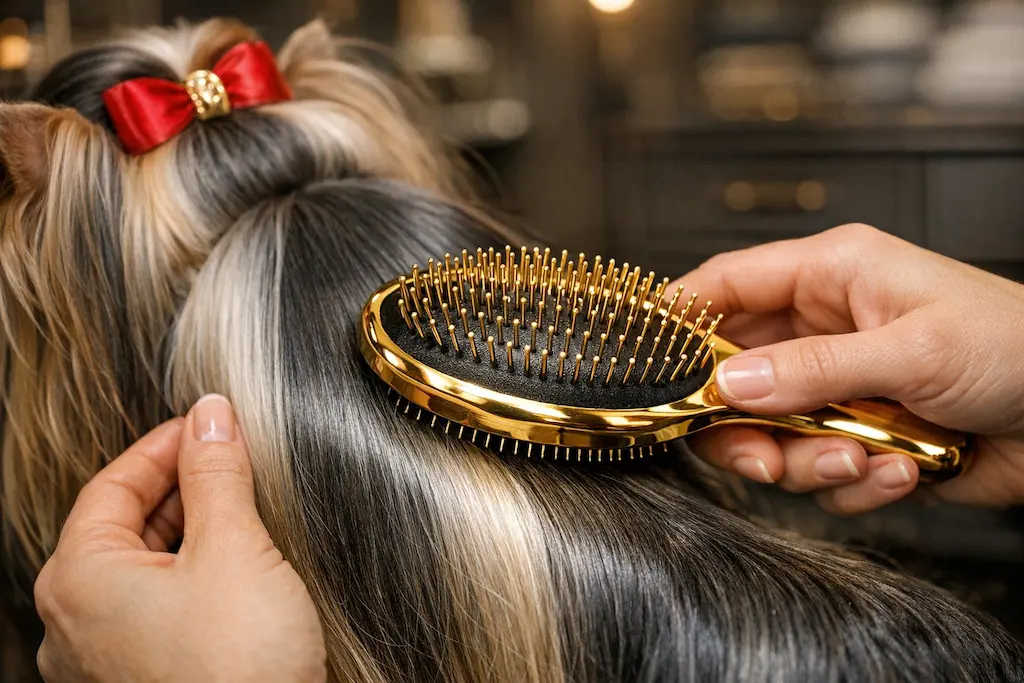
Why Yorkshire Terriers Get Matted
Yorkshire Terriers have unique hair that's prone to matting due to several factors:
1. Hair Type vs. Fur
Yorkies have hair, not fur. Like human hair, it:
- Grows continuously (doesn't shed seasonally)
- Is fine and silky in texture
- Tangles easily without regular brushing
- Collects debris, oils, and dead hair
- Forms permanent mats when neglected
2. High-Mat Zones on Yorkies
Areas Most Prone to Matting:
- Behind ears: Friction from collar, scratching
- Armpits/chest: Leg movement creates friction
- Between back legs: Walking friction, urine contact
- Underbelly: Contact with ground, moisture
- Tail: Sitting, less accessible for grooming
- Paws/feet: Moisture, dirt accumulation
- Facial hair: Food, tears, saliva
3. Common Causes of Mat Formation
- Infrequent brushing: Less than 3x weekly leads to mats
- Bathing without brushing first: Wet tangles become permanent mats
- Collar friction: Constant rubbing creates mats behind ears
- Moisture: Rain, swimming, drool accelerates matting
- Coat length: Longer coats mat faster than short "puppy cuts"
- Puppy to adult coat change: 4-8 months old, worst matting period
- Poor-quality grooming tools: Cheap brushes miss undercoat
How Mats Hurt Your Yorkie
Mats aren't just cosmetic - they cause real pain and health problems:
Health Risks of Untreated Mats
- Constant pain: Tight mats pull on skin 24/7
- Restricted movement: Mats in armpits/legs limit walking
- Skin infections: Trapped moisture breeds bacteria/yeast
- Hot spots: Irritated, painful skin lesions develop
- Parasites: Fleas, ticks hide in mats undetected
- Hematomas: Blood blisters from skin being pulled
- Circulation issues: Very tight mats can restrict blood flow
- Behavioral changes: Pain makes dogs irritable, withdrawn
Severe matting is considered animal neglect in many jurisdictions. If your Yorkie has extensive matting, see a groomer or vet immediately.
Safe DIY Mat Removal (Mild Mats Only)
For small, loose mats that developed recently, you can safely remove them at home with the right technique and patience.
CRITICAL SAFETY
Never use household scissors to cut mats. Yorkie skin is paper-thin and easily pulled into the mat. One slip can result in a severe laceration. Use a well-reviewed dematting tool or see a professional.
Essential Tools
Must-Have Tools:
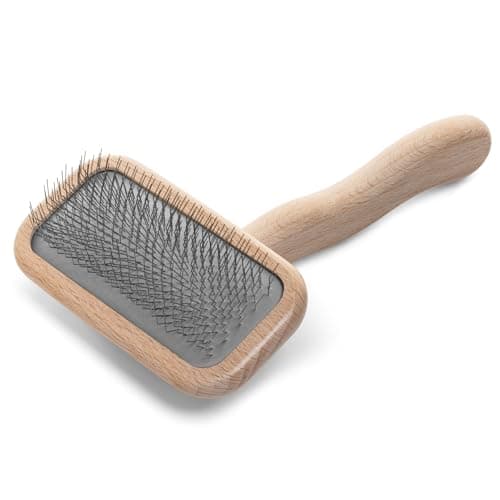
- Slicker brush: Fine wire bristles, flexible head
- Metal comb: Fine and wide teeth combo
- Detangling spray: Makes hair slippery
- High-value treats: Reward patience
- Good lighting: See what you're doing
Optional But Helpful:
- Mat splitter: For moderate mats
- Conditioning spray: Extra slip
- Grooming table: Better positioning
- Helper person: Hold/comfort dog
Step-by-Step Mat Removal Process
Prepare Your Yorkie
- • Choose calm time after exercise
- • Work in well-lit area
- • Have treats ready for rewards
- • Pet and reassure before starting
- • Check mat isn't hiding injury/sore spot
Apply Detangling Spray
- • Spray mat liberally (not just surface)
- • Massage spray into mat gently
- • Wait 2-3 minutes for spray to work
- • Reapply as needed during process
Hold Hair at Base (CRITICAL)
This is the most important step:
- • Place fingers between mat and skin
- • Hold hair firmly at the root
- • This prevents pulling on skin
- • Never skip this - causes pain otherwise
Work from Outside In
- • Start at mat's outer edges
- • Use slicker brush on outer tangles first
- • Work in small sections (size of fingernail)
- • Brush away from skin, not toward it
- • Gradually work toward center/base of mat
Use Mat Splitter if Needed
- • For tighter mats that won't brush out
- • Hold hair firmly at base
- • Gently work splitter through mat
- • This divides mat into smaller sections
- • Then brush out smaller sections
Check Progress with Comb
- • Run metal comb through brushed area
- • Comb should glide smoothly
- • If it catches, keep working that spot
- • Don't move on until comb passes freely
Take Breaks & Reward
- • Work for 5-10 minute sessions max
- • Give treats and praise frequently
- • Take breaks if dog gets stressed
- • Better to do multiple short sessions
- • End on positive note even if not done
Recommended Grooming Tools
NEVER Do These Things
- ❌Cut mats with scissors: Extremely high risk of cutting skin. Mats pull skin up - what looks like hair is often skin.
- ❌Pull or yank: Causes pain and skin damage. Always hold hair at base.
- ❌Bathe before removing mats: Water tightens mats permanently. Always brush first.
- ❌Work on mat for too long: Causes frustration and pain. Take breaks.
- ❌Force it: If mat won't budge, STOP. See professional.
When to See a Professional Groomer
Some matting situations require professional expertise. Don't risk injuring your dog:
See a Professional If:
- ✓ Mats are tight against skin
- ✓ Skin underneath is red, irritated, or has sores
- ✓ Multiple mats are connected together
- ✓ Mats cover more than 20% of coat
- ✓ Dog shows pain when mat is touched
- ✓ Mat has been present for weeks
- ✓ You can't see skin underneath mat
- ✓ Mat is rock-hard and immovable
- ✓ Dog won't tolerate handling
- ✓ You're uncertain or uncomfortable
What Professional Groomers Do
Professional groomers have training and tools for safe mat removal:
- Electric clippers: Can shave under mats safely
- Specialized tools: Professional-grade mat splitters, dematting combs
- Experience: Know when to stop trying and shave instead
- Restraint techniques: Safe handling of stressed dogs
- Skin assessment: Identify infections needing vet care
What to Expect at Groomer
For Severe Matting:
- 1. Groomer will assess mat severity
- 2. May recommend "shave down" (very short cut)
- 3. This is often the only humane option
- 4. Hair will grow back in 8-12 weeks
- 5. Prevents hours of painful dematting
Don't be embarrassed. Groomers see matted dogs regularly and won't judge. They care about your dog's comfort.
Cost Expectations
| Service | Typical Cost | Time |
|---|---|---|
| Regular grooming (no mats) | $45-$75 | 1-2 hours |
| Dematting (mild-moderate) | $75-$120 | 2-3 hours |
| Severe matting shave down | $100-$150+ | 2-4 hours |
Many groomers charge extra for matting because it's time-consuming and stressful for the dog. This is standard and fair.
Preventing Mats: The Best Solution
Prevention is infinitely easier than mat removal. Here's how to keep your Yorkie mat-free:
Brushing Schedule by Coat Length
Puppy Cut (Short)
1-2 inches length
2-3x per week
5-10 minutes per session
Medium Length
2-4 inches length
4-5x per week
10-15 minutes per session
Show Coat (Long)
Floor-length hair
Daily
20-30 minutes per session
Proper Brushing Technique
- 1Line brushing method: Part hair in lines, brush each section from skin to tip
- 2Use slicker brush first: Removes surface tangles and dead hair
- 3Follow with metal comb: Catches any remaining tangles
- 4Don't forget high-mat zones: Behind ears, armpits, between legs
- 5Make it positive: Treats, praise, and short sessions
Additional Prevention Strategies
- Professional grooming every 6-8 weeks: Prevents buildup
- Keep coat shorter: Puppy cuts need less maintenance
- Use leave-in conditioner: Makes hair less prone to tangling
- Brush BEFORE bathing: Never bathe a matted dog
- Dry thoroughly: Damp coat tangles faster
- Remove collar at night: Reduces friction behind ears
- Trim sanitary areas: Keeps urine/feces out of coat
- Check daily during coat change: 4-8 months is worst period
More Free Yorkie Health Tools
Interactive calculators and symptom checkers built specifically for Yorkie owners.
Explore Free Tools