
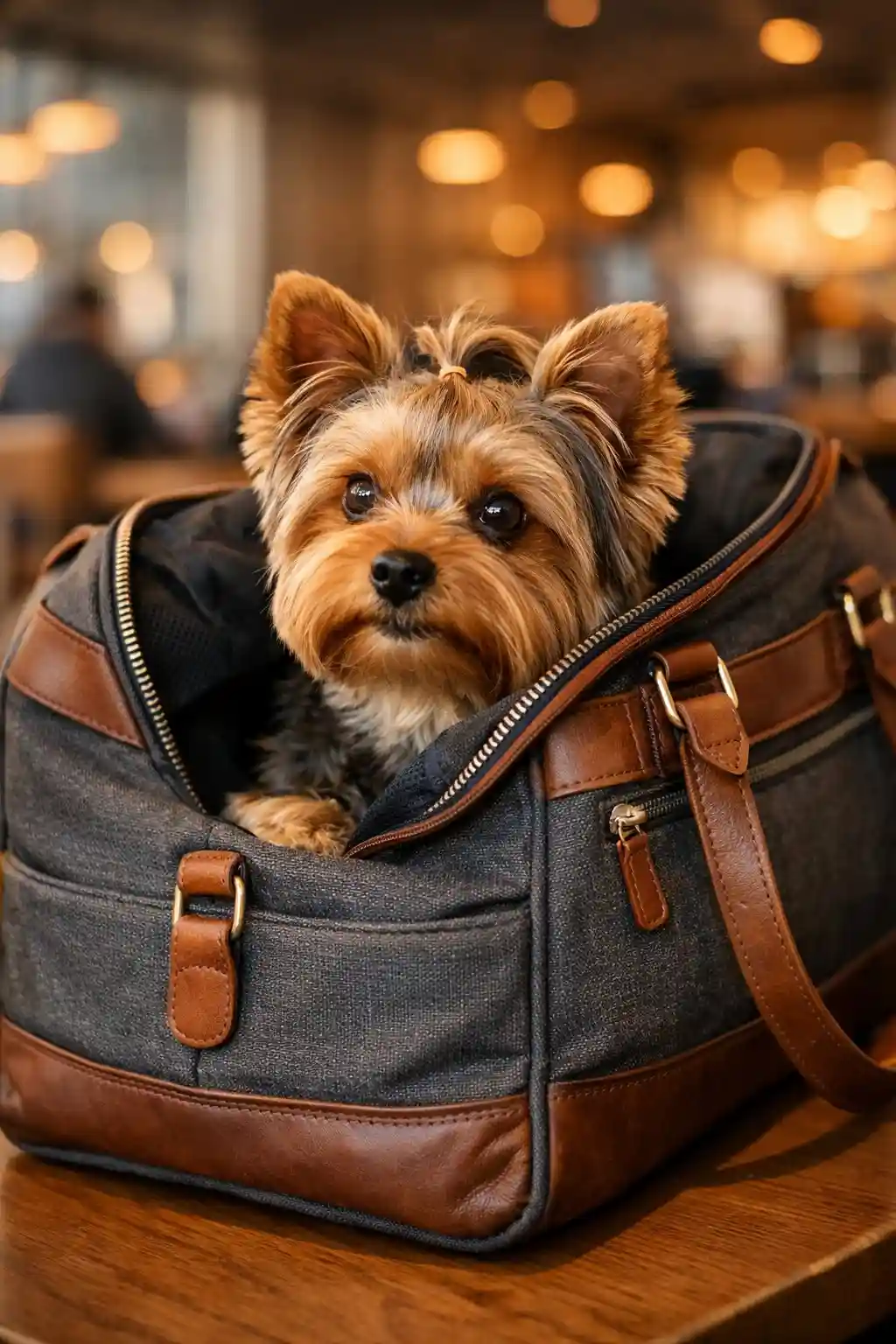
Why Yorkies Need Proper Carriers
Yorkshire Terriers are small, delicate dogs that benefit from carriers in many situations. The right carrier provides:
- Safety: Protection in crowded areas, parking lots, or around larger dogs
- Comfort: Familiar, secure space during stressful situations (vet visits, travel)
- Convenience: Easier than leash for some situations (shopping, public transit)
- Health protection: Prevents overexertion in puppies, seniors, or dogs with health issues
- Legal compliance: Many businesses and transportation require pets be contained
- Temperature control: Protection from extreme heat or cold
When Carriers Are Essential (Not Optional)
- • Air travel: Required by airlines for cabin pets
- • Public transportation: Most require pets in carriers
- • Stores and restaurants: Many only allow contained pets
- • Emergency evacuations: Easy grab-and-go with carrier
- • Multi-dog households: Safe separation during travel
- • Vet visits: Reduces stress in waiting room
Carrier Size Guide for Yorkshire Terriers
Proper sizing is crucial. Too small = cramped and uncomfortable. Too large = dog slides around, feels insecure, and won't use it as a den.
The Golden Rule: Stand, Turn, Lie Down
Your Yorkie should be able to:
- Stand up fully with head not touching top
- Turn around completely without difficulty
- Lie down in natural sleeping position
If they can do all three comfortably, the size is right.
Measuring Your Yorkie
How to Measure:
Length:
From tip of nose to base of tail (where tail meets body). Add 2-4 inches for carrier length.
Height:
From floor to top of head when standing normally. Add 2-3 inches for carrier height.
Width:
Widest part of body (usually chest/shoulders). Add 1-2 inches for carrier width.
Yorkshire Terrier Size Chart
| Yorkie Weight | Carrier Size | Dimensions (L x W x H) | Best For |
|---|---|---|---|
| 2-4 lbs | Small | 16" x 9" x 9" | Puppies, teacup Yorkies |
| 4-7 lbs | Small/Medium | 17" x 10" x 10" | Average adult Yorkies |
| 7-10 lbs | Medium | 18" x 11" x 11" | Larger Yorkies |
Note: Most standard Yorkshire Terriers (4-7 lbs) fit comfortably in Small/Medium carriers. When in doubt, measure your specific dog rather than going by weight alone.
Carrier Types: Complete Comparison
Soft-Sided
Example: Sherpa Original DeluxeBest For:
Advantages
- Airline-approved for most carriers
- Comfortable padding
- Machine washable
- Collapses for storage
- Multiple entry points
Disadvantages
- Less protection than hard-sided
- Can sag when picked up
- Not ideal for very long trips
Hard-Sided
Example: Petmate Two Door Top LoadBest For:
Advantages
- Excellent protection
- Easy to clean
- Secure latches
- Good ventilation
- Durable for years
Disadvantages
- Bulky and heavy
- Not airline cabin approved (cargo only)
- Takes up more space
Sling/Shoulder
Example: YUDODO Pet Sling Carrier
Best For:
Advantages
- Hands-free
- Close body contact
- Lightweight
- Easy on/off
- Affordable
Disadvantages
- Not airline-approved
- Can strain shoulder on long use
- Dog can potentially jump out
- Not suitable for nervous dogs
Backpack
Example: PetsHome Pet Carrier Backpack
Best For:
Advantages
- Weight distributed on both shoulders
- Great for active lifestyle
- Good ventilation
- Secure enclosure
- Storage pockets
Disadvantages
- Not airline cabin-approved
- Dog behind you (can't see them easily)
- Heavier than sling
- Takes practice to put on
Wheeled/Rolling
Example: Paws & Pals Pet Stroller
Best For:
Advantages
- No carrying weight
- Good for elderly/injured dogs
- Storage basket underneath
- Can see surroundings
- Multiple dogs possible
Disadvantages
- Bulky
- Not practical for stairs
- Expensive
- Need smooth surfaces
Airline Travel Requirements
Flying with your Yorkshire Terrier requires an airline-approved carrier. Requirements are strict and non-negotiable.
Universal Airline Requirements
All Airlines Require:
- ✓ Fits under the seat: Must fit completely under seat in front of you
- ✓ Soft-sided: Hard carriers don't fit under seats
- ✓ Secure closures: Zippers with locks or clips
- ✓ Ventilation on 2+ sides: Mesh panels for airflow
- ✓ Waterproof bottom: Accidents happen
- ✓ Leak-proof: No liquids escaping
- ✓ Comfortable padding: For pet's comfort
Maximum Dimensions by Airline
| Airline | Max Dimensions | Fee |
|---|---|---|
| American Airlines | 19" x 13" x 9" | $150 each way |
| Delta | 18" x 11" x 11" | $125-$200 each way |
| United | 18" x 11" x 11" | $125 each way |
| Southwest | 18.5" x 13.5" x 9.5" | $125 each way |
| Alaska | 17" x 11" x 9.5" | $100 each way |
Important: Requirements change. Always verify with your specific airline before booking. Dimensions are maximum - smaller is fine.
Flying Tips for Yorkies
- Book early: Limited pets allowed per flight (usually 2-4)
- Practice at home: Get your Yorkie comfortable in carrier weeks before flight
- Exercise before: Tired Yorkie = calmer flight
- No food 3-4 hours before: Reduces nausea and accidents
- Small water amount: Ice cubes instead of full bowl
- Comfort items: Favorite small toy, item with your scent
- Arrive early: More time = less stress
- Keep under seat entire flight: Never remove dog from carrier
Essential Carrier Features
Regardless of carrier type, certain features are non-negotiable for safety and comfort:
Safety Features
❌ Deal Breakers (Avoid)
- • Cheap zippers that break easily
- • Single closure point (can open accidentally)
- • Poor ventilation (overheating risk)
- • Sharp edges or exposed metal
- • Flimsy construction that collapses
- • No internal leash clip
- • Top opens only (hard to get scared dog out)
✓ Must-Have Features
- • Dual zipper with clips/locks
- • Multiple entry points
- • Mesh on 2+ sides for airflow
- • Padded, washable interior
- • Reinforced bottom (won't sag)
- • Internal leash attachment
- • Adjustable, padded shoulder strap
- • ID tag pocket
Comfort Features
- Soft padding: Cushions bumps, vibration
- Breathable materials: Prevents overheating
- Dark interior: Helps anxious dogs feel secure
- Removable pad: Easy washing
- Privacy flaps: Can cover mesh when dog needs to decompress
- Stable structure: Doesn't flop around when carried
Owner Convenience Features
- Storage pockets for treats, waste bags, documents
- Machine washable (or easy wipe-clean)
- Luggage strap to attach to rolling suitcase
- Collapsible for storage when not in use
- Multiple carrying options (shoulder, hand, crossbody)
- Waterproof bottom panel
Training Your Yorkie to Love Their Carrier
Don't just buy a carrier and expect your Yorkie to hop in happily. Proper introduction prevents carrier fear and travel anxiety.
Week 1: Introduction
- Place carrier in common area: Leave open, don't force dog inside. Let them investigate on their own terms.
- Toss treats near carrier: Create positive association with presence of carrier. Gradually toss closer to opening.
- Feed meals near carrier: Place food bowl next to carrier, then gradually move inside over several days.
- Add comfort items: Soft blanket with your scent, favorite toy. Make it cozy.
Week 2: Building Comfort
- Encourage voluntary entry: Praise and treat when dog goes in on their own. Don't close door yet.
- Practice short stays: Lure inside with treat, close door for 5 seconds, open and reward. Gradually extend time.
- Make it a nap spot: If they fall asleep inside (door open), perfect! This is their safe space now.
Week 3: Movement Practice
- Pick up carrier with dog inside: Start with just lifting off ground, then carrying around room.
- Short walks around house: Carry to different rooms, outside to yard, back inside. Treat after each trip.
- Car rides to fun places: Short trips to park, friend's house - anywhere positive. Avoid only using for vet initially.
Signs of Success:
- ✓ Dog enters carrier voluntarily
- ✓ Relaxed body language inside (lying down, yawning)
- ✓ No whining or scratching to get out
- ✓ Can eat treats calmly while inside
- ✓ Chooses to nap in carrier sometimes
Specific Product Recommendations
Based on real-world testing and owner feedback, here are top-rated carriers for Yorkshire Terriers in different categories:
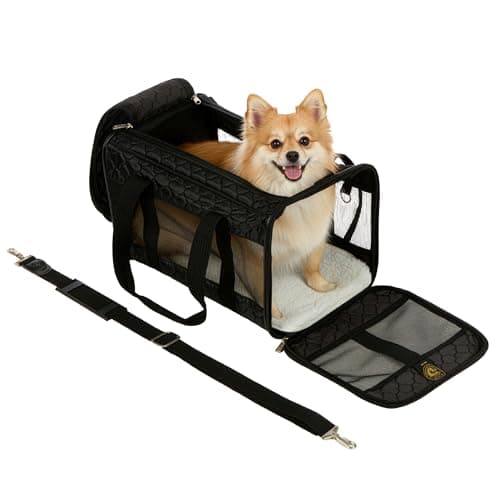
Sherpa Original Deluxe Pet Carrier
Airline-approved soft-sided carrier trusted by thousands of toy breed owners for safe travel. The mesh ventilation panels, secure zipper closures, and comfortable padding make it ideal for Yorkies who need to travel in cabin.
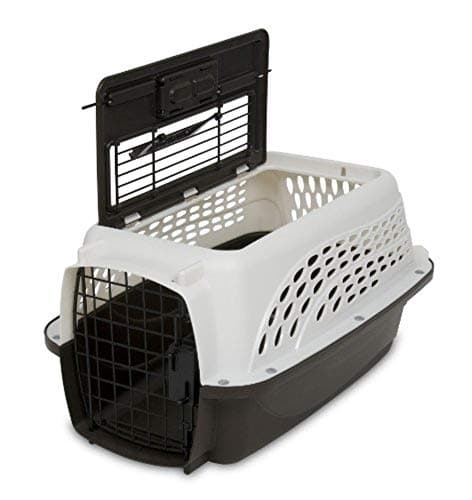
Petmate Two Door Top Load Kennel
Hard-sided carrier with maximum protection for car travel and home use. The dual-door design provides easy access, while the secure latches and ventilation ensure Yorkies stay safe and comfortable during transport.
Note: Prices are approximate and may vary. Always check current reviews before purchasing as product quality can change over time.
Common Carrier Mistakes to Avoid
❌ Buying Too Large
"Room to grow" doesn't work with carriers. Too-large carriers make dogs feel insecure and slide around during transport. Get the right size now; buy new as they grow.
❌ Choosing Based on Looks Only
Cute designs don't matter if the carrier lacks proper ventilation, padding, or security. Function over fashion - your dog's comfort and safety come first.
❌ Not Measuring Your Dog
Relying on weight alone is unreliable. A 5lb Yorkie with long legs needs different dimensions than a 5lb Yorkie with short legs. Always measure length and height.
❌ Skipping Training Period
Forcing your Yorkie into carrier on travel day creates fear and stress. Start training weeks in advance so carrier = safe happy place, not scary prison.
❌ Using Only for Vet Visits
If carrier only appears before vet trips, dog will associate it with stress. Use for fun outings too - parks, friends' houses, pet stores.
Frequently Asked Questions
Can I use a purse as a dog carrier?
Only if specifically designed as a pet carrier with proper ventilation, secure closures, and padding. Regular purses lack safety features and put your dog at risk. Many "designer dog carriers" that look like purses are actually purpose-built pet carriers - those are fine.
How do I clean a carrier?
Soft-sided: Most are machine washable or have removable, washable pads. Use pet-safe enzymatic cleaner for accidents. Hard-sided: Wipe down with pet-safe disinfectant. Clean regularly to prevent odor buildup.
Should I put food and water in the carrier?
For short trips (under 3 hours): No food, minimal water or ice cubes. For long trips: Small amount of water in spill-proof bowl. Never feed full meal in carrier during travel - increases nausea and accidents.
Can two Yorkies share one carrier?
For very short trips and very bonded pairs, maybe. But generally no - they need space to turn around and lie down comfortably. Airlines absolutely prohibit it. Better to have two carriers.