
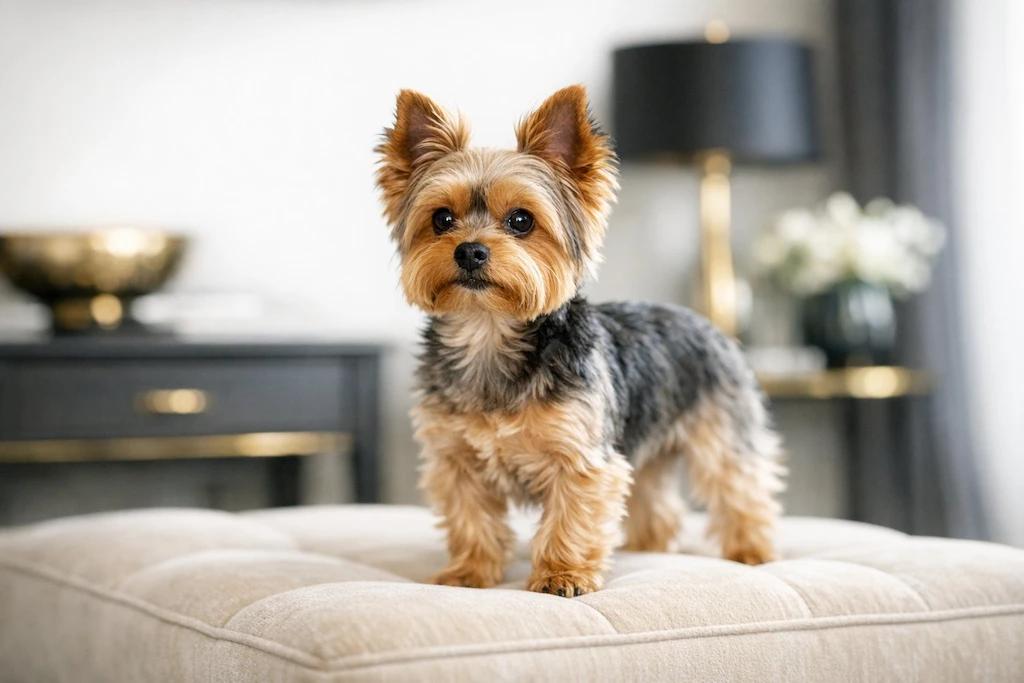
The Truth About Yorkshire Terrier Temperament
Yorkshire Terriers were bred in the 1800s as companion dogs, not guard dogs or fighters. Their natural temperament is friendly, affectionate, and eager to please.
What Yorkshire Terriers Were Actually Bred For
Originally, Yorkies hunted rats in textile mills and mines. This required:
- Confidence: Fearlessly approach prey
- Alertness: Notice movement and sounds quickly
- Tenacity: Don't give up easily
- Independence: Work without constant direction
These terrier traits can manifest as problematic behaviors when misdirected:
- Confidence → Bossiness, demanding behavior
- Alertness → Excessive barking at everything
- Tenacity → Stubbornness, not listening
- Independence → Ignoring commands
Key point: These traits aren't aggression - they're personality characteristics that need proper channeling through training.
Yorkies vs. Actually Aggressive Breeds
Truly Aggressive Dog Traits:
- ✓ Bred specifically for guarding or fighting
- ✓ Unpredictable attacks without warning
- ✓ Difficulty reading body language/intent
- ✓ Strong bite force causing serious injury
- ✓ Genetic predisposition to human aggression
Yorkshire Terriers have NONE of these traits. Their "aggression" is almost always fear, poor training, or Small Dog Syndrome - all fixable issues.
Why Your Yorkie Acts Aggressive
Most Yorkie "aggression" stems from one or more of these root causes:
1. Small Dog Syndrome (Most Common)
This isn't a medical condition - it's learned behavior from being treated differently than larger dogs:
Behaviors That Create Problems:
- • Carrying everywhere (never walks on own)
- • Allowing behavior not allowed in big dogs
- • Laughing at aggressive displays
- • No boundaries or rules
- • Constant attention and coddling
- • Treating like baby/accessory, not dog
- • Protecting from all discomfort
Results in Aggressive Behaviors:
- • Believes they're in charge
- • Doesn't respect owner's authority
- • Snaps when told "no"
- • Demands constant attention
- • Aggressive to other dogs (any size)
- • Resource guards owner
- • Won't tolerate handling
The fix: Treat your Yorkie like a dog. Make them walk, follow rules, earn rewards, and respect boundaries.
2. Lack of Socialization
Puppies have a critical socialization window (8-16 weeks). Yorkies who miss this become fearful of:
- New people (especially men, children)
- Other dogs
- Novel environments
- Loud noises
- Being handled by strangers
Fear manifests as aggression: A scared dog barks, growls, snaps to make the scary thing go away. This works, so behavior is reinforced.
3. Reinforced Behavior (Accidental Training)
Owners unknowingly reward aggression:
- Dog barks at visitor → Owner picks them up and pets them ("It's okay, shhh") → Dog learns: Barking gets attention and comfort
- Dog snaps at child → Owner scolds child instead of dog →Dog learns: Snapping makes annoying things go away
- Dog growls at other dog → Owner pulls dog away, goes different direction → Dog learns: Growling works to control situation
- Dog guards toy aggressively → Owner lets them keep it to avoid conflict → Dog learns: Aggression = I win
How to Fix Aggressive Behavior
Most Yorkie aggression is fixable with consistent training and management:
Step 1: Identify Triggers
Keep a log for one week. Pattern recognition helps you predict and prevent aggressive episodes.
Step 2: Desensitization & Counter-Conditioning
The Process:
- 1Find threshold distance: How close can dog get to trigger before reacting? Start BEFORE this distance.
- 2Expose at safe distance: Let dog see/hear trigger from far enough away they notice but don't react.
- 3Immediately give high-value treats: The second trigger appears, start feeding amazing treats continuously.
- 4Gradually decrease distance: Over days/weeks, work closer. Always stay below reaction threshold.
When to Get Professional Help
Some aggression cases need expert intervention. See a professional if:
Get Professional Help For:
- ✓ Dog has bitten and broken skin
- ✓ Aggression is escalating despite your efforts
- ✓ You're afraid of your dog
- ✓ Dog's aggression is unpredictable
- ✓ Children or elderly people in household
VETTED TRAINER'S RULE
If your Yorkie's reactivity is accompanied by a stiffened tail, showing the whites of their eyes (whale eye), or lunging that cannot be redirected with high-value treats, STOP DIY training and consult a certified veterinary behaviorist immediately.
Prevention: Raising a Non-Aggressive Yorkie
More Free Yorkie Health Tools
Interactive calculators and symptom checkers built specifically for Yorkie owners.
- Use calculators for care planning and daily routines
- Track symptoms with focused Yorkie checkers
- Get practical guidance tailored to small-breed needs
Disclaimer: This article provides general information about Yorkshire Terrier behavior and aggression. Every dog is different, and serious aggression cases require professional evaluation. If your dog has bitten or you feel unsafe, consult a certified dog behaviorist or veterinary behaviorist immediately. This information is not a substitute for professional behavioral assessment and treatment.